Beta-glucuronidase producing microbes
What this marker measures
The collective capacity of the microbial community to produce beta-glucuronidase, a bacterial enzyme that reverses glucuronidation, a Phase II detoxification process in the liver. This may reduce elimination of some medications, hormones, and environmental toxins, potentially increasing enterohepatic recirculation and re-exposure1–5.
Clinical associations
Consider this marker when your patient presents with:


Interpreting the result
All results are compared to Microba's healthy cohort to determine whether they fall within or outside the expected range.
Patient management insights
Reduce excess beta-glucuronidase activity and support detoxification.
GRADE C
Inulin supplementation may reduce faecal beta-glucuronidase activity9,10.
GRADE C
High-dose GOS supplementation may reduce faecal beta-glucuronidase activity11.
GRADE D
GRADE D

Tips for patients discussion
Your report shows elevated levels of gut microbes that can produce beta-glucuronidase, an enzyme that may allow some hormones, medications, and other compounds to be recycled in the gut instead of being eliminated. Increasing dietary fibre and specific prebiotic foods may help support a healthier balance.
The community
No single species produces beta-glucuronidase alone — here are some of the most common, however this list is not exhaustive
- Acetatifactor sp900066565
- Alistipes obesi
- Alistipes onderdonkii
- Alistipes putredinis
- Alistipes shahii
- Bacteroides ovatus
- Bacteroides thetaiotaomicron
- Bacteroides uniformis
- Bacteroides_B vulgatus
- Barnesiella intestinihominis
- Blautia_A sp900066165
- CAG-41 sp900066215
- Faecalibacterium MIC7145
- Faecalibacterium MIC7145
- Faecalibacterium prausnitzii_C
- Faecalibacterium prausnitzii_D
- Faecalibacterium prausnitzii_G
- Fusicatenibacter saccharivorans
- GCA-900066135 MIC6659
- Gemmiger formicilis
- Gemmiger sp003476825
- KLE1615 sp900066985
- Parabacteroides distasonis
- Parabacteroides distasonis
- UBA1417 sp003531055
- UBA7160 MIC9207
How results are calculated
All microbiome marker results are compared against the Microba Healthy Cohort — a purpose-built reference group of more than 450 healthy individuals, collected and analysed using the same workflow as patient samples.
Each marker is scored by comparing the patient's relative abundance against the cohort average. The distance from this average is expressed as standard deviations, and determines whether a result is classified as Low, Borderline, or High.

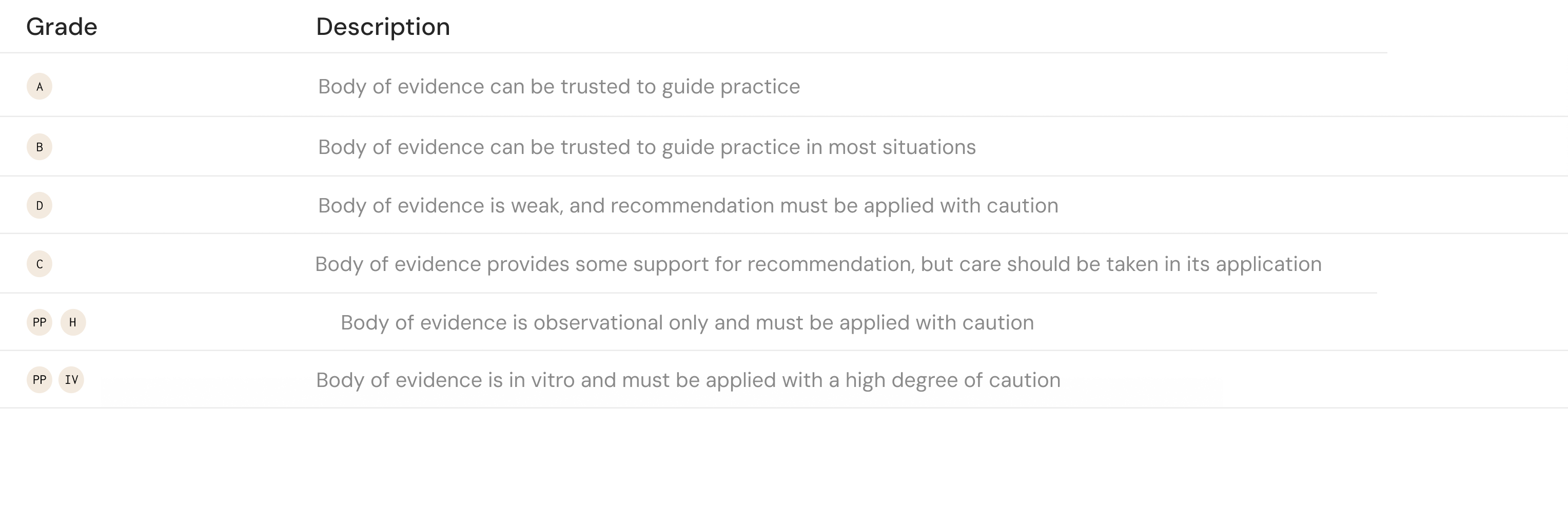
Source references for all clinical associations, interpretation definitions, and patient management insights on this card.
1. Elmassry, M. M., Kim, S. & Busby, B. Predicting drug-metagenome interactions: Variation in the microbial β-glucuronidase level in the human gut metagenomes. PLOS ONE 16, e0244876 (2021).
2. Ervin, S. M. et al. Gut microbial β-glucuronidases reactivate estrogens as components of the estrobolome that reactivate estrogens. Journal of Biological Chemistry 294, 18586–18599 (2019).
3. Chamseddine, A. N. et al. Intestinal bacterial β-glucuronidase as a possible predictive biomarker of irinotecan-induced diarrhea severity. Pharmacology & Therapeutics 199, 1–15 (2019).
4. Ervin, S. M. et al. Targeting Regorafenib-Induced Toxicity through Inhibition of Gut Microbial β-Glucuronidases. ACS Chem. Biol. 14, 2737–2744 (2019).
5. Kehrer, D. F. S. et al. Modulation of Irinotecan-induced Diarrhea by Cotreatment with Neomycin in Cancer Patients.
6. Johnson, S. K., Chua, V., Hall, R. S. & Baxter, A. L. Lupin kernel fibre foods improve bowel function and beneficially modify some putative faecal risk factors for colon cancer in men. British Journal of Nutrition 95, 372–378 (2006).
7. McIntosh, G. H., Noakes, M., Royle, P. J. & Foster, P. R. Whole-grain rye and wheat foods and markers of bowel health in overweight middle-aged men. The American Journal of Clinical Nutrition 77, 967–974 (2003).
8. Wu, W.-T., Cheng, H.-C. & Chen, H.-L. Ameliorative effects of konjac glucomannan on human faecal β-glucuronidase activity, secondary bile acid levels and faecal water toxicity towards Caco-2 cells. Br J Nutr 105, 593–600 (2011).
9. De Preter, V. et al. Effect of dietary intervention with different pre- and probiotics on intestinal bacterial enzyme activities. Eur J Clin Nutr 62, 225–231 (2008).
10. Bouhnik, Y. et al. Prolonged administration of low-dose inulin stimulates the growth of bifidobacteria in humans. Nutrition Research 27, 187–193 (2007).
11. Van Dokkum, W., Wezendonk, B., Srikumar, T. & Van Den Heuvel, E. Effect of nondigestible oligosaccharides on large-bowel functions, blood lipid concentrations and glucose absorption in young healthy male subjects. Eur J Clin Nutr 53, 1–7 (1999).
12. Lidbeck, A. et al. Impact of Lactobacillus acidophilus Supplements on the Faecal Microflora and Soluble Faecal Bile Acids in Colon Cancer Patients. Microbial Ecology in Health and Disease 4, 81–88 (1991).
13. Goldin, B. R. & Gorbach, S. L. The effect of milk and lactobacillus feeding on human intestinal bacterial enzyme activity. The American Journal of Clinical Nutrition 39, 756–761 (1984).