Oral species
What this marker measures
The presence of oral-origin bacteria detected within the gut microbiome. These species are normal residents of the mouth but elevated levels in the gut may indicate increased oral-to-gut transfer and colonisation. This pattern has been associated with intestinal inflammation, proton pump inhibitor use, poor oral or periodontal health, and reduced microbial load1–7.
Clinical associations
Consider this marker when your patient presents with:


Interpreting the result
All results are compared to Microba's healthy cohort to determine whether they fall within or outside the expected range.
Patient management insights
Reduce oral-to-gut microbial transfer and support a resilient gut microbial environment.
GRADE D
GRADE D

Tips for patients discussion
Your report shows higher-than-expected levels of bacteria in the gut that usually live in the mouth. This may relate to oral health, gum inflammation, reduced stomach acidity, or gut environment changes. Addressing oral health and supporting a fibre-rich diet are key steps.
The community
Oral-origin species are defined by the Human Oral Microbiome Database. Here are some of the most commonly-detected species, however this list is not exhaustive.
- Dialister invisus
- Fusobacterium animalis
- Haemophilus_D parainfluenzae
- Haemophilus_D parainfluenzae_K
- Haemophilus_D parainfluenzae_L
- Haemophilus_D parainfluenzae_M
- Haemophilus_D sp001679485
- Haemophilus_D sp001815355
- Pauljensenia bouchesdurhonensis
- Pauljensenia sp000278725
- Pauljensenia sp000466265
- Streptococcus anginosus
- Streptococcus anginosus_C
- Streptococcus MIC7033
- Streptococcus mutans
- Streptococcus parasanguinis_B
- Streptococcus salivarius
- Streptococcus sp000479315
- Streptococcus sp001556435
- Streptococcus sp001587175
- Veillonella atypica
- Veillonella dispar_A
- Veillonella parvula_A
- UBA1417 sp003531055
How results are calculated
All microbiome marker results are compared against the Microba Healthy Cohort — a purpose-built reference group of more than 450 healthy individuals, collected and analysed using the same workflow as patient samples.
Each marker is scored by comparing the patient's relative abundance against the cohort average. The distance from this average is expressed as standard deviations, and determines whether a result is classified as Low, Borderline, or High.

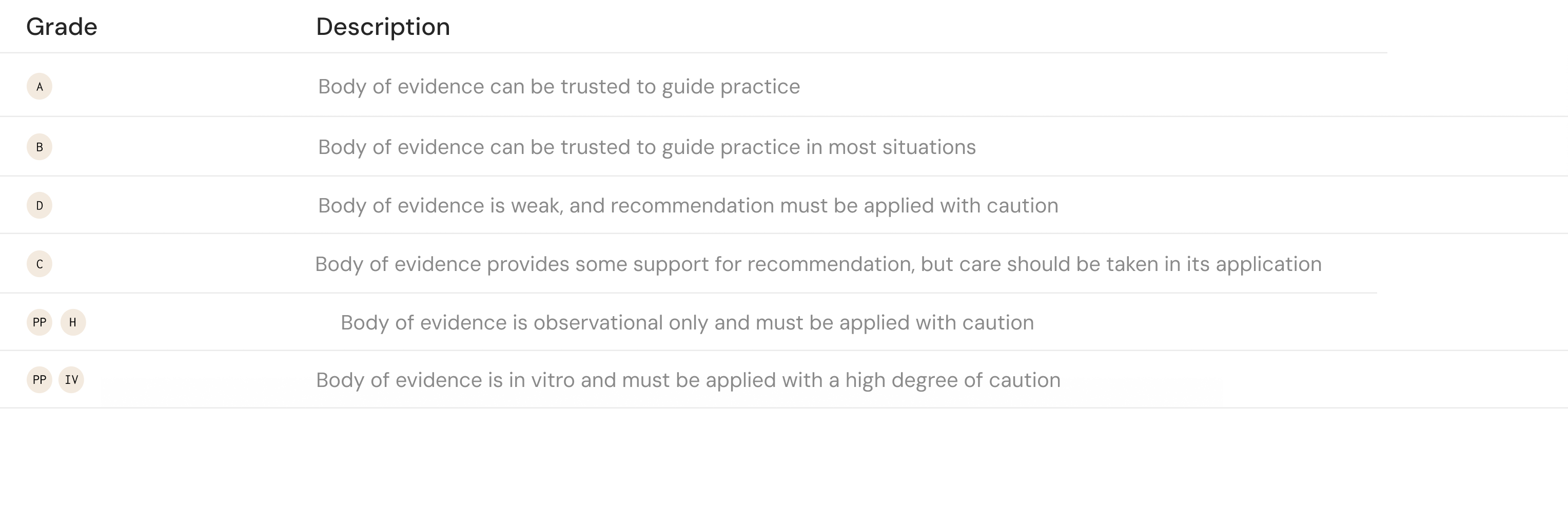
Source references for all clinical associations, interpretation definitions, and patient management insights on this card.
1. Peter Rimmer et al. The Gut Microbiome at the Onset of Inflammatory Bowel Disease: A Systematic Review and Unified Bioinformatic Synthesis. Gastroenterology 170, 539–556 (2026).
2. Nishijima, S. et al. Fecal microbial load is a major determinant of gut microbiome variation and a confounder for disease associations. Cell 188, 222-236.e15 (2025).
3. Xiao, X. et al. Proton pump inhibitors alter gut microbiota by promoting oral microbiota translocation: a prospective interventional study. https://doi.org/10.1136/gutjnl-2023-330883 (2024) doi:10.1136/gutjnl-2023-330883.
4. Kageyama, S. et al. High-Resolution Detection of Translocation of Oral Bacteria to the Gut. J Dent Res 102, 752–758 (2023).
5. Bao, J. et al. Periodontitis may induce gut microbiota dysbiosis via salivary microbiota. Int J Oral Sci 14, 1–11 (2022).
6. Imhann, F. et al. Proton pump inhibitors affect the gut microbiome. Gut 65, 740–748 (2016).
7. Zhernakova, A. et al. Population-based metagenomics analysis reveals markers for gut microbiome composition and diversity. Science 352, 565–569 (2016).
8. Baima, G. et al. Effect of Periodontitis and Periodontal Therapy on Oral and Gut Microbiota. J Dent Res 103, 359–368 (2024).
9. Bajaj, J. S. et al. Periodontal therapy favorably modulates the oral-gut-hepatic axis in cirrhosis. American Journal of Physiology-Gastrointestinal and Liver Physiology 315, G824–G837 (2018).
10. Ghetti, F. D. F. et al. Effects of Dietary Intervention on Gut Microbiota and Metabolic-Nutritional Profile of Outpatients with Non-Alcoholic Steatohepatitis: a Randomized Clinical Trial. J Gastrointestin Liver Dis 28, 279–287 (2019).
11. Mokkala, K. et al. Metagenomics analysis of gut microbiota in response to diet intervention and gestational diabetes in overweight and obese women: a randomised, double-blind, placebo-controlled clinical trial. https://doi.org/10.1136/gutjnl-2020-321643 (2021) doi:10.1136/gutjnl-2020-321643.