Oxalate-degrading microbes
What this marker measures
The collective capacity of the gut microbial community to degrade oxalate, a compound found in many plant foods and also produced by the body. By degrading oxalate in the intestine, gut microbes may reduce oxalate absorption into the bloodstream and and excretion of oxalate into the urine1,2. Low oxalate-degrading potential may be relevant to calcium oxalate kidney stone risk in susceptible individuals1–5.
Clinical associations
Consider this marker when your patient presents with:

Interpreting the result
All results are compared to Microba's healthy cohort to determine whether they fall within or outside the expected range.
Patient management insights
Support healthy oxalate handling and reduce urinary oxalate exposure in patients with recurrent calcium oxalate kidney stones.
Calcium should be consumed with oxalate-rich meals for maximum benefit.

Tips for patients discussion
Your report suggests lower gut microbial capacity to break down oxalate — a compound found in many plant foods that can contribute kidney stones in susceptible people. We can support oxalate handling by ensuring enough calcium with mealsbecause calcium can bind oxalates in the gut and reduce oxalate absorption into the bloodstream.
The community
Oxalate is not degraded by a single species, it’s a community-level function. Here are some of the most commonly-detected contributors, however this list is not exhaustive.
- 51_20 sp001917175
- Muribaculum sp002492595
- Bifidobacterium animalis
- Oxalobacter formigenes_A
- Bifidobacterium dentium
- Oxalobacter MIC6654
- Bifidobacterium MIC6680
- Oxalobacter MIC7806
- Bifidobacterium pseudocatenulatum
- Paramuribaculum MIC6915
- CAG-1031 sp000431215
- Paramuribaculum sp000431155
- Escherichia coli
- Ruminococcaceae MIC7581
- Escherichia coli_D
- Streptococcus mutans
- Escherichia dysenteriae
- UBA7173 MIC7159
- Lactobacillus acidophilus
- UBA7173 MIC7508
- UBA7173 MIC7508
- UBA7173 MIC7508
- UBA7173 MIC9174
- UBA7173 sp001701135
How results are calculated
All microbiome marker results are compared against the Microba Healthy Cohort — a purpose-built group of more than 450 healthy individuals, with samples collected and analysed using the same workflow as patient samples.
Each marker is scored by comparing the patient's relative abundance against the cohort average. The distance from this average is expressed as standard deviations, and determines whether a result is classified as Low, Borderline, or High.

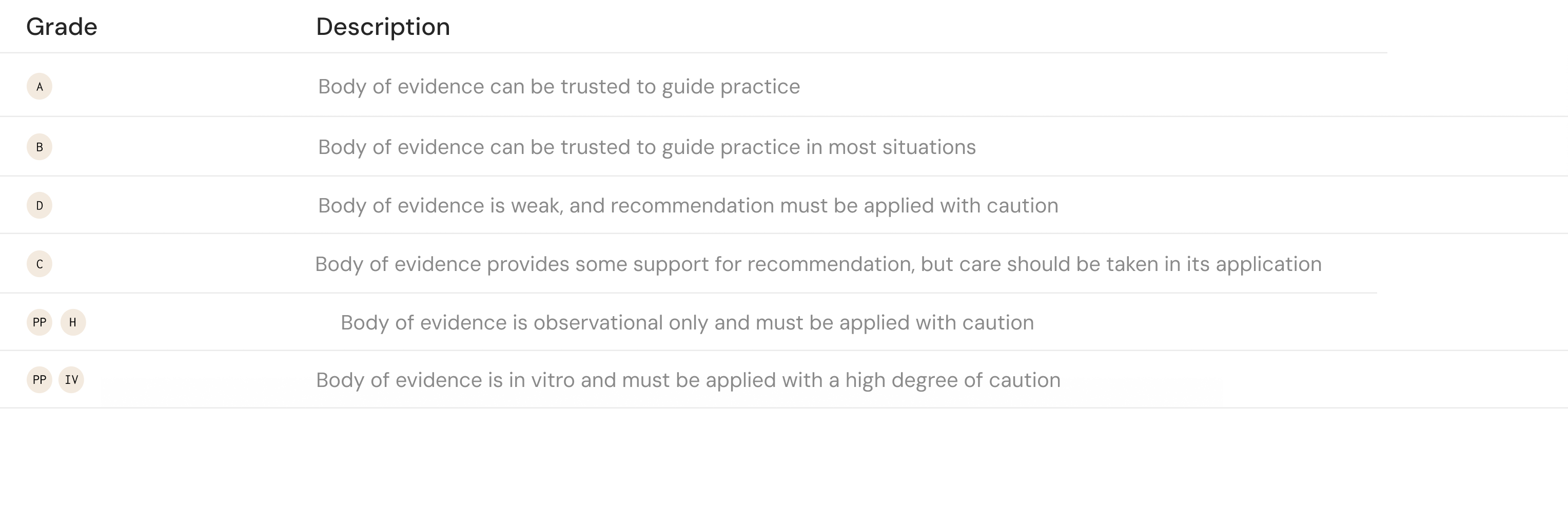
Source references for all clinical associations, interpretation definitions, and patient management insights on this card.
1. Siener, R. et al. The role of Oxalobacter formigenes colonization in calcium oxalate stone disease. Kidney International 83, 1144–1149 (2013).
2. Jiang, J. et al. Impact of dietary calcium and oxalate, and Oxalobacter formigenes colonization on urinary oxalate excretion. J Urol 186, 135–139 (2011).
3. Ticinesi, A. et al. Understanding the gut–kidney axis in nephrolithiasis: an analysis of the gut microbiota composition and functionality of stone formers. Gut 67, 2097–2106 (2018).
4. Tavasoli, S. et al. Association of intestinal oxalate-degrading bacteria with recurrent calcium kidney stone formation and hyperoxaluria: a case-control study. BJU Int 125, 133–143 (2020).
5. Troxel, S. A., Sidhu, H., Kaul, P. & Low, R. K. Intestinal Oxalobacter formigenes Colonization in Calcium Oxalate Stone Formers and Its Relation to Urinary Oxalate. Journal of Endourology 17, 173–176 (2003).
6. Nouvenne, A. et al. Diet to reduce mild hyperoxaluria in patients with idiopathic calcium oxalate stone formation: a pilot study. Urology 73, 725–730, 730.e1 (2009).
7. von Unruh, G. E., Voss, S., Sauerbruch, T. & Hesse, A. Dependence of oxalate absorption on the daily calcium intake. J Am Soc Nephrol 15, 1567–1573 (2004).
8. Borghi, L. et al. Comparison of two diets for the prevention of recurrent stones in idiopathic hypercalciuria. N Engl J Med 346, 77–84 (2002).