Trimethylamine (TMA) producing microbes
What this marker measures
The collective capacity of the microbial community to produce trimethylamine (TMA) from dietary precursors such as choline and carnitine. TMA is absorbed and converted in the liver to TMAO, which at higher circulating levels has been associated with inflammatory pathways and cardiovascular risk1–6.
Clinical associations
Consider this marker when your patient presents with:


Interpreting the result
All results are compared to Microba's healthy cohort to determine whether they fall within or outside the expected range.
Patient management insights
Reduce microbial TMA production and limit TMAO-driven inflammation.
GRADE D
Carnitine supplementation may increase plasma trimethylamine N-oxide (TMAO) levels. When aiming to reduce plasma TMAO, limiting or avoiding carnitine supplementation may be effective11–13
GRADE C
Limiting or avoiding free choline supplementation may reduce plasma trimethylamine N-oxide (TMAO) levels14–16
GRACE C
GRADE D

Tips for patients discussion
Your report shows elevated microbial capacity to produce TMA, a compound your liver can convert to TMAO. Higher TMAO has been linked with cardiovascular risk. Red meat is the main dietary contributor, so reducing red meat and increasing fibre-rich plant foods may help.
The community
TMA is not produced by a single species, it’s a community-level function. Here are some of the most commonly-detected contributors, however this list is not exhaustive.
- Acetatifactor sp900066565
- Agathobacter faecis
- Agathobacter rectale
- Agathobaculum butyriciproducens
- Anaerostipes hadrus
- Clostridium_M sp000431375
- Clostridium_Q sp003024715
- Coprococcus_A catus
- Coprococcus_B comes
- Eubacterium_E hallii
- Eubacterium_I ramulus
- Faecalibacterium MIC7145
- Faecalibacterium prausnitzii_C
- Faecalibacterium prausnitzii_D
- Faecalibacterium prausnitzii_G
- Faecalibacterium prausnitzii_I
- Gemmiger formicilis
- Gemmiger MIC9530
- Gemmiger sp003476825
- Lawsonibacter asaccharolyticus
- Odoribacter splanchnicus
- Roseburia hominis
- Oscillibacter sp900066435
- Roseburia inulinivorans
How results are calculated
All microbiome marker results are compared against the Microba Healthy Cohort — a purpose-built reference group of more than 450 healthy individuals, collected and analysed using the same workflow as patient samples.
Each marker is scored by comparing the patient's relative abundance against the cohort average. The distance from this average is expressed as standard deviations, and determines whether a result is classified as Low, Borderline, or High.

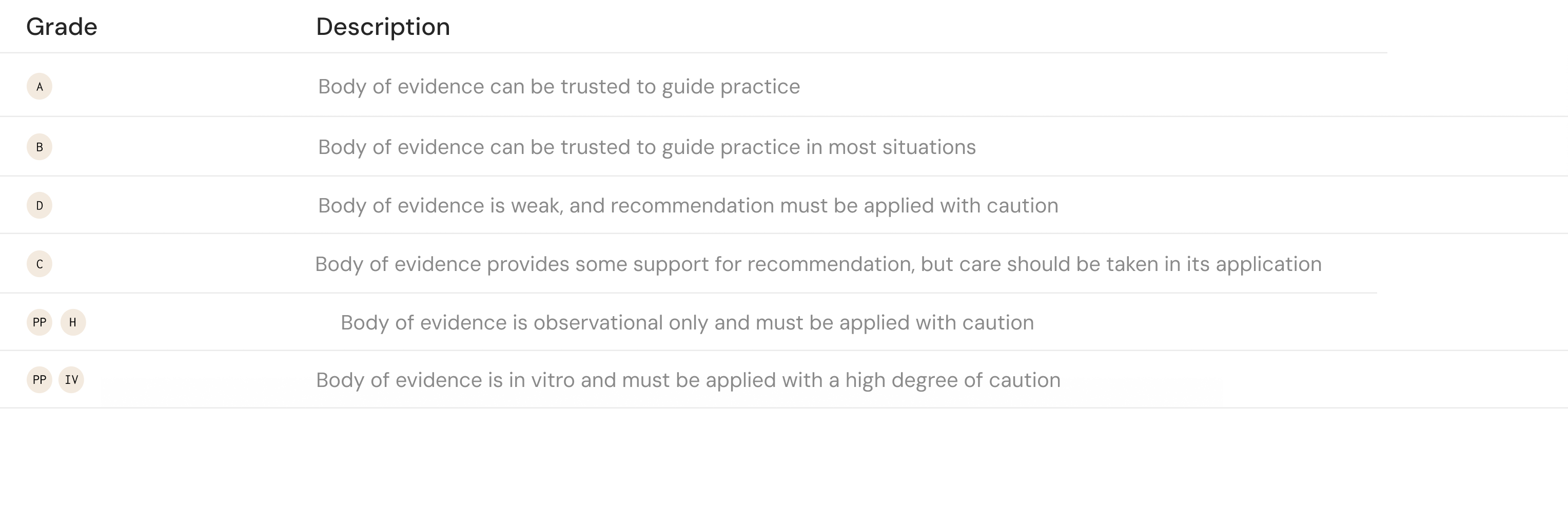
Source references for all clinical associations, interpretation definitions, and patient management insights on this card.
1. Chen, S. et al. Correlation between serum trimethylamine-N-oxide and body fat distribution in middle-aged and older adults: a prospective cohort study. Nutr J 23, 70 (2024).
2. Jalandra, R., Makharia, G. K., Sharma, M. & Kumar, A. Inflammatory and deleterious role of gut microbiota-derived trimethylamine on colon cells. Front. Immunol. 13, 1101429 (2023).
3. Farhangi, M. A. & Vajdi, M. Novel findings of the association between gut microbiota–derived metabolite trimethylamine N-oxide and inflammation: results from a systematic review and dose-response meta-analysis. Critical Reviews in Food Science and Nutrition 60, 2801–2823 (2020).
4. Gencer, B. et al. Gut Microbiota‐Dependent Trimethylamine N‐oxide and Cardiovascular Outcomes in Patients With Prior Myocardial Infarction: A Nested Case Control Study From the PEGASUS‐TIMI 54 Trial. JAHA 9, e015331 (2020).
5. Chou, R.-H. et al. Trimethylamine N-Oxide, Circulating Endothelial Progenitor Cells, and Endothelial Function in Patients with Stable Angina. Sci Rep 9, 4249 (2019).
6. Senthong, V. et al. Intestinal Microbiota‐Generated Metabolite Trimethylamine‐ N‐ Oxide and 5‐Year Mortality Risk in Stable Coronary Artery Disease: The Contributory Role of Intestinal Microbiota in a COURAGE‐Like Patient Cohort. JAHA 5, e002816 (2016).
7. Tate, B. N. et al. Changes in Choline Metabolites and Ceramides in Response to a DASH-Style Diet in Older Adults. Nutrients 15, 3687 (2023).
8. Krishnan, S. et al. Adopting a Mediterranean-style eating pattern with low, but not moderate, unprocessed, lean red meat intake reduces fasting serum trimethylamine N-oxide (TMAO) in adults who are overweight or obese. British Journal of Nutrition 128, 1738–1746 (2022).
9. Crimarco, A. et al. A randomized crossover trial on the effect of plant-based compared with animal-based meat on trimethylamine-N-oxide and cardiovascular disease risk factors in generally healthy adults: Study With Appetizing Plantfood—Meat Eating Alternative Trial (SWAP-MEAT). The American Journal of Clinical Nutrition 112, 1188–1199 (2020)
.10. Wang, Z. et al. Impact of chronic dietary red meat, white meat, or non-meat protein on trimethylamine N-oxide metabolism and renal excretion in healthy men and women. European Heart Journal 40, 583–594 (2019).
11. Sawicka, A. K., Renzi, G. & Olek, R. A. The bright and the dark sides of L-carnitine supplementation: a systematic review. J Int Soc Sports Nutr 17, 49 (2020).
12. Bordoni, L. et al. A Pilot Study on the Effects of l-Carnitine and Trimethylamine-N-Oxide on Platelet Mitochondrial DNA Methylation and CVD Biomarkers in Aged Women. Int J Mol Sci 21, 1047 (2020).
13. Samulak, J. J. et al. L-Carnitine Supplementation Increases Trimethylamine-N-Oxide but not Markers of Atherosclerosis in Healthy Aged Women. Ann Nutr Metab 74, 11–17 (2019).
14. Wilcox, J. et al. Dietary Choline Supplements, but Not Eggs, Raise Fasting TMAO Levels in Participants with Normal Renal Function: A Randomized Clinical Trial. The American Journal of Medicine 134, 1160-1169.e3 (2021).
15. Taesuwan, S. et al. Choline metabolome response to prenatal choline supplementation across pregnancy: A randomized controlled trial. FASEB J 35, e22063 (2021).
16. Cho, C. E. et al. Effect of Choline Forms and Gut Microbiota Composition on Trimethylamine-N-Oxide Response in Healthy Men. Nutrients 12, 2220 (2020).
17. Cashman, J. R. et al. In vitro and in vivo inhibition of human flavin-containing monooxygenase form 3 (FMO3) in the presence of dietary indoles. Biochemical Pharmacology 58, 1047–1055 (1999).
18. Annunziata, G. et al. Effect of Grape Pomace Polyphenols With or Without Pectin on TMAO Serum Levels Assessed by LC/MS-Based Assay: A Preliminary Clinical Study on Overweight/Obese Subjects. Front. Pharmacol. 10, (2019).
19. Annunziata, G. et al. Effects of Grape Pomace Polyphenolic Extract (Taurisolo®) in Reducing TMAO Serum Levels in Humans: Preliminary Results from a Randomized, Placebo-Controlled, Cross-Over Study. Nutrients 11, 139 (2019).
20. Obeid, R. et al. Plasma trimethylamine-N-oxide following supplementation with vitamin D or D plus B vitamins. Molecular Nutrition & Food Research 61, 1600358 (2017).