Zonulin
What this marker measures
This marker measures zonulin family peptides, or ZFPs, in stool. ZFPs are proteins detected by the assay that are structurally related to zonulin and may include proteins such as properdin, rather than zonulin itself1. While serum ZFPs have been associated with some conditions linked to altered gut barrier function2–6, the biological significance of stool ZFPs is less well understood.


Clinical associations*
Consider this marker when your patient presents with:


*In addition to the assay’s intended use, all clinical associations have been reviewed by the Microba science team to ensure clinical validity supported by Microba’s cited literature.
Interpreting the result
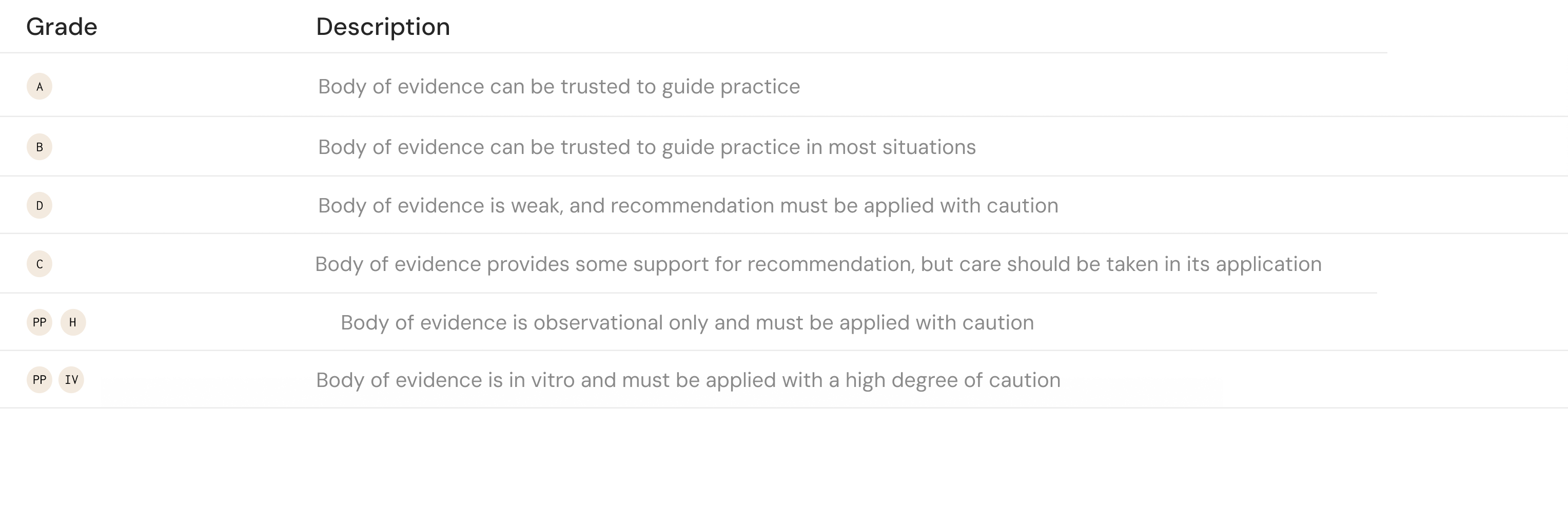
Treatment guidance
Address the cause and support intestinal barrier function.

Tips for discussing out-of-range results
This marker measures zonulin family peptides, involved in regulating your gut barrier. A high result doesn't confirm increased permeability on its own, but it helps guide the conversation alongside your symptoms and other markers
Secretory IgA- Reference sourcesSource references for all clinical associations, interpretation definitions, and patient management insights on this card.
1. Scheffler, L. et al. Widely Used Commercial ELISA Does Not Detect Precursor of Haptoglobin2, but Recognizes Properdin as a Potential Second Member of the Zonulin Family. Front. Endocrinol. 9, (2018).
2. ElGhandour, A. M. et al. Value of zonulin as a diagnostic and prognostic marker in different degrees of nonalcoholic fatty liver disease. Egyptian Liver Journal 14, 43 (2024).
3. Arango-González, A. et al. Putative intestinal permeability markers do not correlate with cardiometabolic health and gut microbiota in humans, except for peptides recognized by a widely used zonulin ELISA kit. Nutrition, Metabolism and Cardiovascular Diseases 33, 112–123 (2023).
4. Yuan, J.-H. et al. Impaired intestinal barrier function in type 2 diabetic patients measured by serum LPS, Zonulin, and IFABP. Journal of Diabetes and its Complications35, 107766 (2021).
5. Aasbrenn, M., Lydersen, S. & Farup, P. G. Changes in serum zonulin in individuals with morbid obesity after weight-loss interventions: a prospective cohort study. BMC Endocr Disord 20, 108 (2020).
6. Ohlsson, B., Orho-Melander, M. & Nilsson, P. M. Higher Levels of Serum Zonulin May Rather Be Associated with Increased Risk of Obesity and Hyperlipidemia, Than with Gastrointestinal Symptoms or Disease Manifestations. Int J Mol Sci 18, 582 (2017).
7. Zhou, Q. et al. Randomised placebo-controlled trial of dietary glutamine supplements for postinfectious irritable bowel syndrome. https://doi.org/10.1136/gutjnl-2017-315136 (2019) doi:10.1136/gutjnl-2017-315136.
8. Ried, K., Travica, N., Dorairaj, R. & Sali, A. Herbal formula improves upper and lower gastrointestinal symptoms and gut health in Australian adults with digestive disorders. Nutrition Research 76, 37–51 (2020).
9. Zuhl, M. N. et al. Effects of oral glutamine supplementation on exercise-induced gastrointestinal permeability and tight junction protein expression. J Appl Physiol (1985)116, 183–191 (2014).
10. Davison, G., Marchbank, T., March, D. S., Thatcher, R. & Playford, R. J. Zinc carnosine works with bovine colostrum in truncating heavy exercise–induced increase in gut permeability in healthy volunteers12. The American Journal of Clinical Nutrition 104, 526–536 (2016).
11. Hałasa, M., Maciejewska-Markiewicz, D., Baśkiewicz-Hałasa, M., Safranow, K. & Stachowska, E. Post-Delivery Milking Delay Influence on the Effect of Oral Supplementation with Bovine Colostrum as Measured with Intestinal Permeability Test. Medicina (Kaunas) 56, 495 (2020).
12. Hałasa, M. et al. Oral Supplementation with Bovine Colostrum Decreases Intestinal Permeability and Stool Concentrations of Zonulin in Athletes. Nutrients 9, 370 (2017).
13. Marchbank, T. et al. The nutriceutical bovine colostrum truncates the increase in gut permeability caused by heavy exercise in athletes. American Journal of Physiology-Gastrointestinal and Liver Physiology 300, G477–G484 (2011).
14. Buckley, J. D., Butler, R. N., Southcott, E. & Brinkworth, G. D. Bovine Colostrum Supplementation During Running Training Increases Intestinal Permeability. Nutrients 1, 224–234 (2009).
15. Garcia Vilela, E. et al. Influence of Saccharomyces boulardii on the intestinal permeability of patients with Crohn’s disease in remission. Scand J Gastroenterol 43, 842–848 (2008).